

You Deserve to Own Your Instruments - Here's the Model That Makes It Possible
How AKAI could build a subscription that actually works in your favor, and why the math supports it on their end too.

AKAI Doesn’t Know Who Its Best Customer Is Yet — But I Do
With the recent release and apparent success of the MPC sample, Akai is slowly reclaiming a space it once dominated. -High-end offerings like the MPC Live III and the MPC XL are among the most capable music production hardware units ever released; the MPC sample is a hit. But in truth, the marketing department at AKAI Pro is completely missing a version of their favorite customer.
No, I’m not talking about the boom-bap beatmaker flipping through dusty floppy discs containing soul samples from vintage record stores. Not the SP-1200 YouTube beatmaking influencer softly re-creating the same drum pattern over vintage Japanese samples. Nor is it the preverbial hip-hop YouTube producer knocking out the same 808 patterns that gained them notoriety in the early 2000s.
While those people exist, and yes, they do matter, as they’ve kept the MPC name alive for 30+ years. Akai’s hardware is quietly evolving past them, and there's a whole category of producers sitting right at the intersection of their best efforts and advancing technology and their worst commercial approaches.
I’m one of them
And probably you too.
TLDR [AI overview 🤖]: AKAI is building hardware for electronic, synth-forward, arrangement-focused producers — but selling software like it’s still 2015. The commercial model doesn’t match the product vision. And there’s a hybrid ownership + subscription approach that would fix it for both sides of the transaction — more revenue for AKAI, more creative security for the producer. Here’s exactly what it looks like.
The MPC Is Not What You Think It Is Anymore
If you haven’t taken a look at the current lineup at AKAI lately, the hardware has moved far past its reputation.
The MPC Live III and MPC XL aren’t drum machines, and AKAI has moved away from marketing them as such. They are completely standalone music production centers. Each containing 8-core processors, up to simultaneous plugin instances, CV/gate outputs expanding modular integrations, stem separation, clip launching, and full arrangement, the MPC product line isn't’t just for ‘in-the-box box’ producers,
its’ a product suite designed for someone running a hybrid studio setup,
not some youngin’ chopping up beats in slicex or the old head chopping up beats on his dusty ass “MP”
This new ecosystem is for the sound designer, the sample maker, the modular synth enthusiast.
The Rennaisance Musician
Showcasing demonstrations from Teddy Riley, Young Chop and even EDM artist at its launch at NAMM 2026, these artists introductions aren’t by chance, its powerful brand signaling.
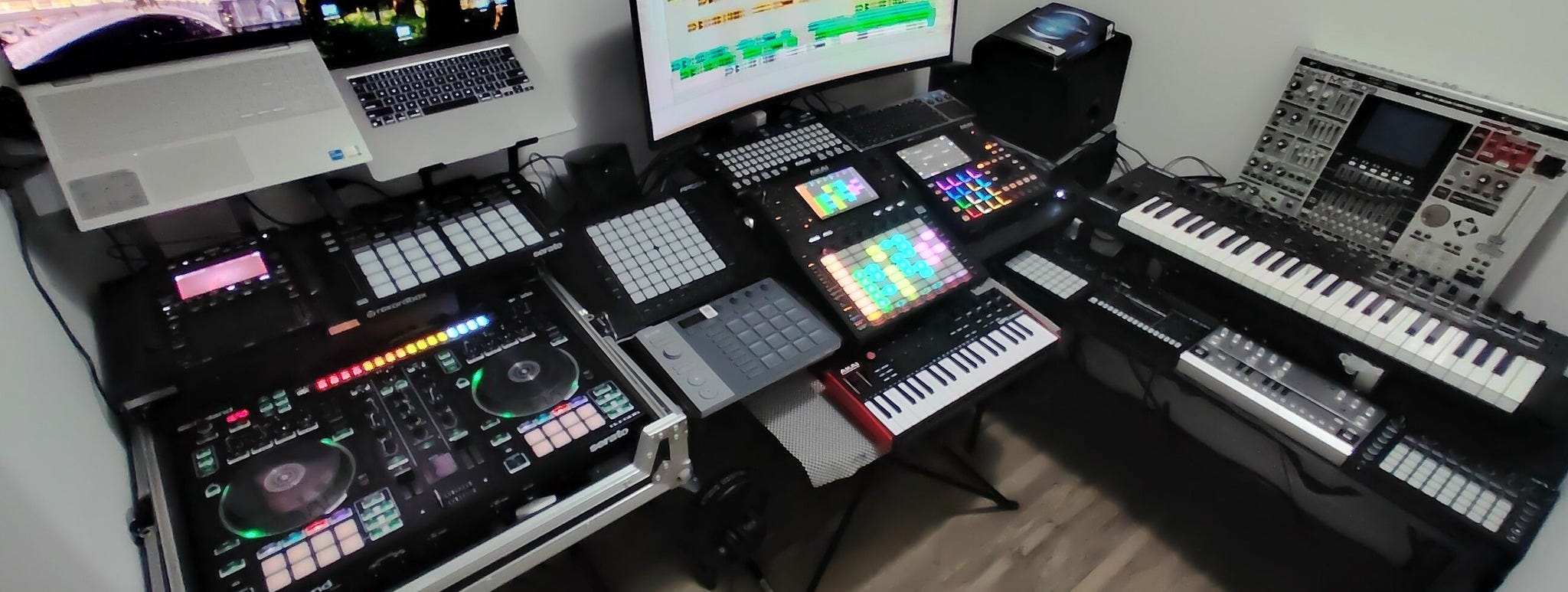
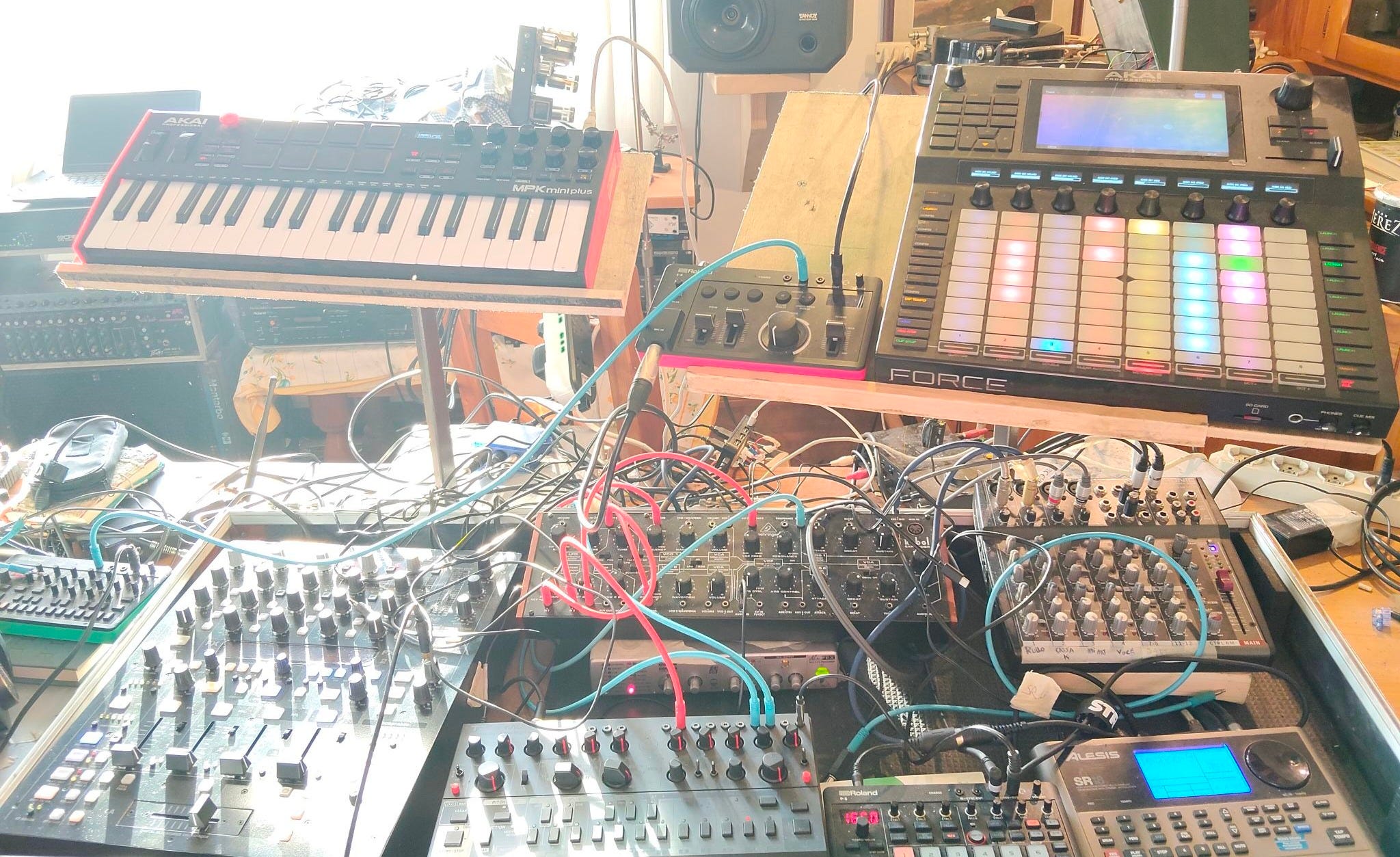
IMHO, the AKAI Force is where AKAI takes this even further, where the MPC has blossomed into a full production center, the Force was always built for clip-based, arrangement-first electronic music workflow. If you’re making samples, creating House music, techno, ambient, experimental, or today’s Hip-Hop and R&B, the Force is arguably the better product offering than the MPC XL … even at the same price point.
I personally use the Force,
I use it every day, and if it made sense and I could justify the spend right now, I’d upgrade to the MPC XL. But for now, with the Force, I still have something just as competitive (as far as production).
I 100% plan on staying in the AKAI ecosystem longer because AKAI is clearly building towards the artist that I am. However, the products are right. The strategy behind delivering them is not.
And yes, I’m talking about their software.
The Real Problem: Ownership Anxiety Is a Workflow Killer
Here’s the tension point every Force and MPC user is going to feel at some point.
You’re building a production suite around this hardware or integrating it into an existing setup. REAL money has been invested not just in hardware but in the effects and instruments that live inside of it. Between the MPC Instrument Collection, the Creative FX collection, and some of the newer NI play series instruments, you’re slowly building your unique sonic identity around this toolkit.
Akai is releasing new products and updates enough to keep the equipment feeling ‘new’ yet familiar; however, when you start looking at the prices, everything becomes expensive, and things start to feel unstable.
Some stuff is outright purchaseable, especially when on sale or gets bundled with new hardware (sometimes they give legacy users new stuff when new hardware is released, too).
But even eventually, with all of the releases, it feels like AKAI is soon headed towards subscription territory. And if that’s the case, what is the answer to this fundamental question: “If I’m building my sound around these tools, what happens when I stop paying?”
And that question matters. It’s not just about financial paranoia; it's a legitimate branding concern.
If my core instruments are locked to a subscription status, my ability to open old projects and deliver them to clients, or to work without internet connectivity, is at risk. And that’s not some hypothetical question; it’s happening to producers across the industry, including at Akai.
Now, of course, AKAI doesn't have a subscription model yet. Still, the question poses anxiety and a form of ‘analysis paralysis’ that ultimately is a tax on your creative process and on AKAI's potential revenue.
Why the Current Models Both Miss the Mark
Pure subscription (the Netflix model) ‘Solves’ the access problem but immediately creates an ownership problem. You’re essentially licensing the content for a low monthly price, but you own nothing, or very little of it.
For a producer building a catalog over time, that’s a bad trade. The tools that define your sound should disappear because a payment failed, nor should you pay 2-10x what they cost to access them.
Pure one-time purchase (the traditional model) ‘solves’ the ownership issue but creates the access problem they are currently in.
Individual instruments retail for between $99 and $499 each. The full ecosystem will cost well over $1k at purchase, which most producers at this tier are not going to spend on software in one transaction. SO they effectively buy nothing, the cheapest thing, or only units that are on sale, and the full potential of the unit and customer value goes untapped.
Both models fail AKAI commercially (which is why I speculate they introduced the MPC Sample into the mix). A pure subscription model builds EFT (Electronic Funds Transfer) revenue but doesn't create the incentive to navigate the hardware value ladder. One-time purchases create transactional customers who disappear until the next hardware release; these are the biggest complainers and detractors of the messaging AKAI wants about its products. Effectively, this creates ‘vampires’ with Akai products and no ongoing connection to the ecosystem.
There’s a third model that solves all of this. And it’s a blueprint which already exists.
What MeldaProduction Gets Right (And Where It Breaks Down)
I’ve been a fan of Meldaproduction products for some time, and they have been running a ‘subscribe to own’ model on their complete bundle for several years. The idea is simple: you pay your monthly fee, and when your cumulative payments reach the price of the full bundle (at time of purchase) you recieve a permanent licens, no more payments ever.
It’s the right instinct because the ownership destination makes the subscription feel different than pure rent. It feels good, I like that you’re building towards something.
Though a great idea, that model actually falls apart in this conversation.
Their full bundle is priced at $2,462, and the monthly subscription is $18. That’s a 137-month payoff 😆
Payoff Period (monthly) = Bundle Price / Monthly Rate
                        = $2,462 / $18
                        = ~137 months ≈ 11.4 years

Payoff Period (annual)  = $2,462 / $194/yr
                        = ~12.7 years
Let’s use industry-standard churn rates and say that, at a realistic 4–5% monthly churn rate, less than 1% of subscribers will reach full ownership.
Meaning the probability of completing 137 monthly payments looks like this:
P(completing at month n) = (1 − λ)^n

Where:
  n = payoff months (137 for Melda monthly)
  λ = monthly churn rate

At 4% monthly churn:  (0.96)^137 ≈ 0.004  →  ~0.4% of subscribers own it
At 5% monthly churn:  (0.95)^137 ≈ 0.001  →  ~0.1% of subscribers own it
The framing is honest, but the math makes no sense. Nobody is going to own these products this way, and honestly, as someone who was paying this for a while, I opted to start buying the plugins I wanted when they ran their “Eternal Madness” sales.
For this to actually serve producers and not just the finance department at Image line, aka Meldaproduction, the payoff timeline has to be realistic and human scale, think car lease, not mortgage.
Quick detour: if you’re thinking about how software investment stacks up against overall studio ROI, my post on [building better home recordings with just your MPC] covers exactly how to maximize what you already own before spending anything new.
The Hybrid Model That Actually Works
SO let’s say that I actually had the job I wanted at Akai, or at least a consulting position. Here’s a bit of the architecture I’d build if I were running their software/hardware strategy.
Layer 1 — Hardware Purchase = Permanent Core
Buying any MPC or Force above the entry level gains you a defined set of instruments and effects that are permanently licensed to you. NO subscription, no monthly, just yours that ships with the unit.
The tier would scale with hardware price:
Force / MPC Live III ($1,699) → Core AIR FX Collection + MPC Instrument Collection permanently unlocked
MPC XL ($2,899) → All of the above + full AIR Instrument Expansion Pack 3 + NI Play Series permanently unlocked
The software inclusion value at each tier is calculated against the hardware’s MSRP :
Hardware_Tier_Software_Value = MSRP_Bracket × Inclusion_Rate

Example:
  MPC Live III:  $1,699 MSRP × ~38% inclusion rate  →  ~$650 software value
  MPC XL:        $2,899 MSRP × ~34% inclusion rate  →  ~$999 software value

Total AKAI/AIR software ecosystem at full retail:
  MPC Instrument Collection:          ~$499
  AIR Creative FX Collection Plus:    ~$150
  AIR Instrument Expansion Pack 3:    ~$499
  Additional standalone AIR synths:   ~$200–$300
  ─────────────────────────────────────────
  Full retail total:                  ~$1,350–$1,450
  Bundled subscribe-to-own price:     ~$799–$999
This formalizes what AKAI already partially does — the XL ships with NI content — but makes it explicit, documented, and legally clear that this software is owned, not borrowed.
Taking from Native Instruments Komplete 15 Select, each hardware tier could contain a different collection of instruments, based on genre/preference, that producers could select when activating their hardware units.
Your question, "What do I actually own?” gets answered on day one of the hardware purchase.
Layer 2 — Subscription is for What’s New, Not What Exists
The monthly subscription doesn't get your existing product library. It unlocks instruments, expansion packs, seasonal content drops, NI collaboration releases, beta OS features, exclusives, YouTube tutorial series, and more as they are released throughout the year
There’s a lot of value that needs to be provided in this ecosystem, probably the most valuable would be tutorials and workshops exclusive to membership (these could be hosted on a separate platform or inMusic with dynamic watermarking to prevent copyright infringement)
Yes some of the expansion packs will have to be delivered with the subscription model, however, think o fit like a record labels release schedule, you’re not renting instruments, you’re subscribing to content.
$15 a month is the sweet spot
$19 a month is pushing it, but there better be some damn good perks.
And this pipeline already exists.
Monthly_Sub_Value = New_Instruments_Per_Year × Avg_Instrument_Price × Access_Rate
                                          ÷ 12

Example at 8 releases/year, $75 avg price, full access:
  Monthly_Sub_Value = (8 × $75 × 1.0) / 12 = $50/month in access value
  Monthly_Sub_Cost  = $20/month
  Value Surplus     = $30/month in the producer's favor
Layer 3 — Credit Accumulation Toward Permanent Ownership
Why this works is that every payment month builds a credit balance. That balance will be redeemable for a permanent unlock of any instrument in the catalog. Let's gos go to the top of the market at $20/month with an 80% credit conversion, you’re accumulating $16/month in ownership credits.
After 6 months, you have enough to unlock one or two instruments permanently.
After 12 months, you have the power to choose which licenses you want to own, permanently, the stuff that you actually use, that is part of your Sonic brand.
Yes, you can cancel the subscription anytime. But the permanently owned instruments stay with you.
The subscription content goes away. No surprises, no hostages, and
And if the subscription content is free enough, we’ll miss it and want to come back.
and don’t even mention building a community around this…
Layer 4 — Hardware Upgrade Continuity
Final boss. ..
hardware upgrade time, your owned software is fully compatible and travels with you. The new hardware tier adds another permanent batch. 😇
This is the carrot that Akai wants to dangle to motivate its users to upgrade. ForceOrce owwho’sho’s been accumulating credits, owns 8 instruments outr, right has a very different calculation when looking at the MPC XL versus someone with no current software investment in the ecosystem.
The upgrade becomes a natural progression, not a painful learning curve. These customers are going to purchase what they need, versus what they think they need—huge difference in customer expectations, which means a huge difference in customer value.
So let's look at the full revenue model across the entire ecosystem
Hybrid_CLV = Hardware_Margin (one-time)
           + (Sub_Months × Monthly_Rate)
           − (Credits_Redeemed × Instrument_COGS)
           + Hardware_Upgrade_Probability × Next_Tier_Margin

vs. Traditional model:
Traditional_CLV = Hardware_Margin
               + (Expansion_Pack_Revenue × Natural_Attach_Rate)
And the expected LTV on the subscription layer alone, accounting for churn:
E[LTV_sub] ≈ (m / λ) × [1 − (1 − λ)^(n_p)] + P × (1 − λ)^(n_p)

Where:
  m   = monthly subscription rate ($20)
  λ   = monthly churn rate
  n_p = payoff months (P / m)
  P   = full bundle price ($899)

At $20/month, 36-month payoff, varying churn:

  2% monthly churn  →  P(completion) = 48%  →  E[LTV] ≈ $726
  4% monthly churn  →  P(completion) = 23%  →  E[LTV] ≈ $537
  6% monthly churn  →  P(completion) = 11%  →  E[LTV] ≈ $397
  8% monthly churn  →  P(completion) =  5%  →  E[LTV] ≈ $303
Herein lies the number AKAI would optimize toward revenue, where there was none. Force and MPC users have high daily engagement,ment which makes this model significantly viable, especially given their different usage. A lower churn rate is already beneficial to the product.
The Myth Worth Busting: “Subscriptions Are Always a Bad Deal for Producers
I understand the thinking that subscriptions are always a bad deal , but the truth is , not exploring them is a huge cop out.
The real issue is not the payments; it’s always what you get for something that buys permanent ownership in a reasonable time while delivering ongoing new value which is a fundamentally different product that delivers nothing but access.
The subscription models that created this backlash, the ‘rent forever or lose everything’ models, were bad deals because they extract the maximum revenue while minimizing customer security. That’s what’s working for companies building microcommunities around niche interests and extreme value.
A well designed subscribe to own model with a 24--36 month payoff ruway, credit accuumulation, community integration and hardware bundled permanent staple products is the mostProducerr friendly commercial model currently available. Low upfront costs, access to everything, and a clear path to clearership are a big deal. But the math works for AKAI too.
Subscriptions with credit accumulation generate more predictable revenue than one-time sales; they will produce higher upgrade rates and reduce the customer acquisition cost for the next generation of hardware.
why?
The subscriber already feels invested in the ecosystem, AND if donethere's, there’s a built-in community-based promotion engine to presell the product and guarantee social media presence for web optimization
The profitability comparison breaks down like this:
Profit_subscribe_to_own = E[LTV] × Gross_Margin % − CAC_sub
Profit_outright_sale    = (Bundle_Price × Gross_Margin %) − CAC_one_time

At $899 bundle, 80% software gross margin, $30 CAC:
  Outright profit          = ($899 × 0.80) − $30  =  $689
  Subscribe-to-own @ 4% churn: ($537 × 0.80) − $30  =  $400
  Subscribe-to-own @ 2% churn: ($726 × 0.80) − $30  =  $551

Subscribe-to-own wins on total market profit when:

  Market_Size_sub / Market_Size_outright  >  Profit_outright / Profit_sub

At 4% churn, subscribe-to-own needs 1.72× the customer volume of outright sales
to match total profit — highly achievable when a $20/month entry removes the
$899 upfront barrier for a significant share of the hardware buyer base.
Nobody loses in this model. Which is exactly why it should exist.
BUT everything must fire on 100%
They HAVE to source or high-quality content whoers that can deliver on product tutorial techniques, and packaging, presets, samples, etc.
These will become the credible voices in the community that Takaiakai builds with its subscription model.
Without this direct connection to the community, everything will feel like a generic attempt to sell products and gain more money.
Practical Workflow: What You Can Do Right Now
This conversation may have some nuace that I may be missing,
I know I didnt dive into the live music and performance/sync aspect of their target customer. Many people like myself are looking at alternative ways of earning an income and Inmusic actually has the product pipeleine to support this transition. maybe I’ll continue this talk next month.
Either way
the more voices we have talking about it the better, be sure to leave a comment below and describe your perfect scenario so that AKAI can see this one day…
For now, I guess we’ll have to keep buying the instruments and effects on sale!!!
Till next time
SOVLTRON
P.S. I’ll be releasing some music soon so stay tuned!
The remainder of the Article is just some AI overviews for the web and folks who have little time to read.
Anything on the blog written with AI (besides captions and meta stuff) will be indicated with an [AI] mark or 🤖.
[AI]Practical Takeaway🤖
AKAI is building hardware for electronic and synth-forward producers. Still, the software model hasn’t caught up — there’s a gap between who the hardware is designed for and how the software is currently being marketed.
A hybrid model — a permanent core bundled with hardware, a subscription for new content, and credit accumulation toward ownership — addresses ownership anxiety while giving AKAI the recurring revenue and hardware-upgrade motivation it actually needs.
You can protect yourself right now by prioritizing outright purchases on your core instruments and using Airwindows to cover the rest without any subscription dependency.
[AI] Frequently Asked Questions
What software comes permanently with the AKAI MPC XL? The MPC XL ships with AKAI’s core effects and sounds, plus select NI Play Series instruments, including Analog Dreams and Lone Forest. However, the exact status of permanent licenses versus bundled access is worth confirming directly with AKAI, as their licensing terms continue to evolve.
Is the AKAI Force still worth buying in 2026? Absolutely — especially for electronic, clip-based, and arrangement-forward producers. The Force received a major OS update in 2025 (Force,3.5), adding full plugin support and MPC Stems. It’s a different workflow than the MPC XL at a lower price point, and for certain production styles, it’s the stronger choice.
What is AIR Music Tech’s relationship with AKAI? AIR Music Technology is the software development arm behind AKAI’s plugin instruments and effects. They originally built the core FX suite for Avid Pro Tools and have since developed the MPC Instrument Collection, the Creative FX Collection, and the AIR Instrument Expansion Pack series specifically for AKAI hardware and DAW use.
What’s the best AIR Music Tech bundle for MPC users? The MPC Instrument Collection (Fabric XL, OPx-4, Organ, Stage Piano, Stage EP, Studio Strings) is the most MPC-native starting point. The AIR Creative FX Collection Plus gives you 28 professional mixing and creative effects. Toge, there they represent the core productive software ecosystem for MPC/Force users.
What is a subscribe-to-own model in music software? Subscribe-to-own means paying a recurring monthly or annual fee, with the agreement that once your cumulative payments reach the full purchase price, you receive a permanent license. MeldaProduction’s MCompleteBundle uses this model. The key variables are the bundle price, monthly rate, and payoff timeline — which determine whether the model actually favors the customer.
How do I protect my production workflow from subscription risk? Prioritize permanent licenses for any plugin that defines your core sound. Use free, authorization-free tools like Airwindows to cover processing needs without subscription dependency. Keep license files backed up across multiple locations. Avoid building a production chain around cloud-only or always-online required plugins for your main projects.
Why is the AKAI Force better than the MPC for some producers? The Force uses a clip-based, scene-oriented workflow similar to Ableton Live. For producers working in electronic, ambient, or improvisational live performance contexts, the Force’s pad-per-clip matrix and session-style arrangement view maps more naturally to how they think about music than the MPC’s traditional pattern-and-sequence structure.
Will AKAI introduce a subscription model for MPC software? There’s no official announcement as of early 2026. But the trajectory — NI collaboration, expanding plugin catalog, increasing software complexity — strongly suggests a formalized subscription or subscribe-to-own tier is coming. The question is whether it’s designed to favor the producer or primarily to favor the balance sheet.
Internal Links


What would your ideal AKAI software model look like? Drop your take in the comments — especially if you’re a Force user navigating the same ownership questions.

Subscribe to Practical Audio Lab
.
Not no but hell no. Glad I still have my Triton and Virus. They do anything the akais can do and I OWN THEM.